
New Year, New Soil: How to Plan Your Best Growing Season Yet
Posted by Woodland Tools Co. on 5th Jan 2026
There is a distinct feeling when the calendar finally flips over. The holiday noise fades, the decorations go back into boxes, and we are left with the quiet, sometimes stark reality of deep winter.
It’s tempting to look out at the frozen ground, the bare branches, and the grey sky and think that gardening is currently pressed on "pause."
We disagree. In fact, we believe that the turn of the year is the most critical time for a successful gardener.
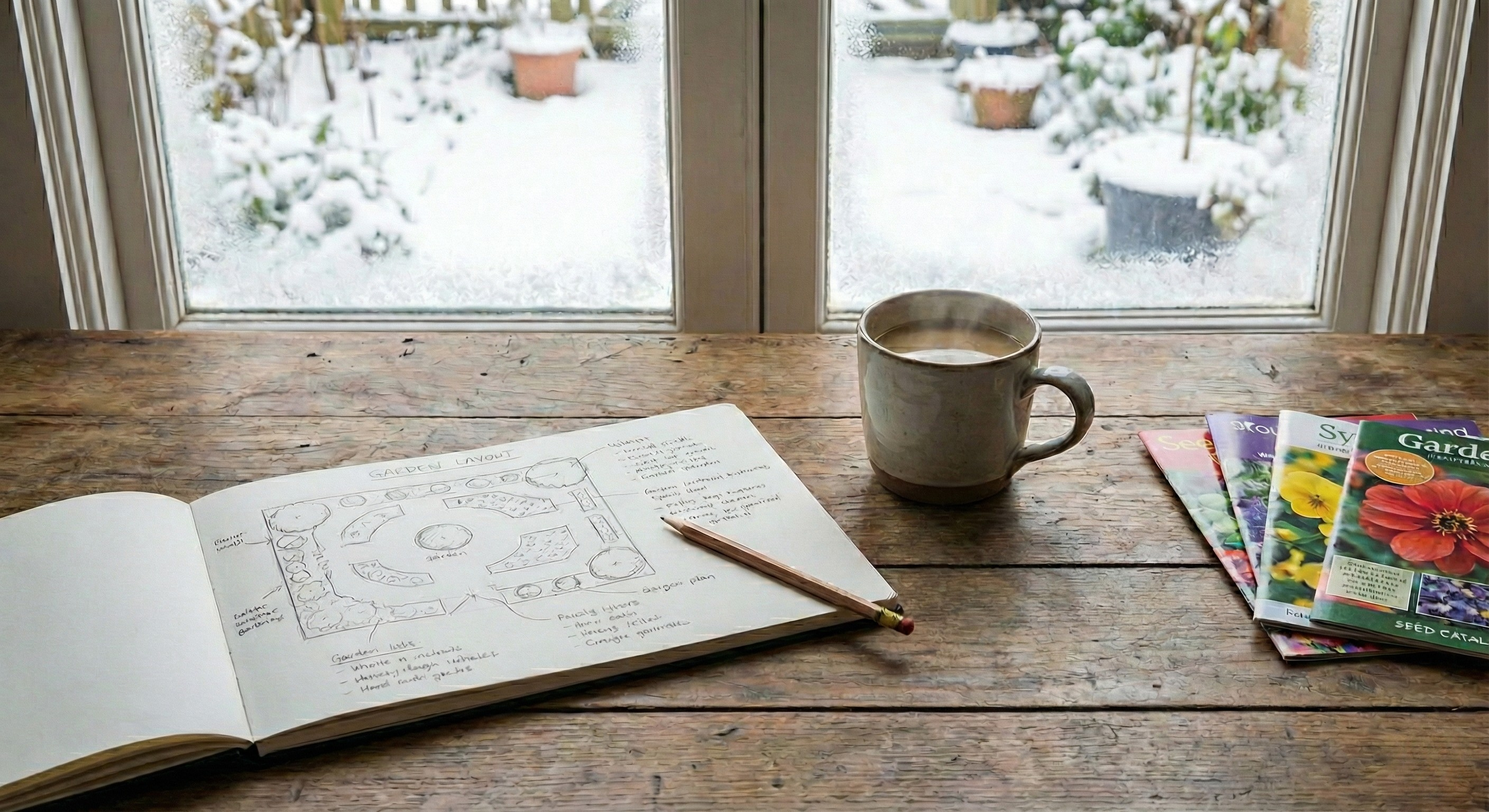
While the soil sleeps, the gardener dreams. The new year offers something we desperately crave: a blank slate. It’s a chance to forgive the failed tomato experiments of last summer, forget the weeds that got away from us in August, and imagine a space that is productive, beautiful, and newly inspiring.
Gardens aren't really made in May. They are imagined in January, planned in February, and executed in March. If you wait until the first warm day to think about your garden, you’re already behind.
Here is our guide to embracing the "dreaming season" and turning over a new leaf in your garden this year.
1. The Honest Audit: Learning from Last Year
A "fresh start" doesn't mean erasing the past; it means learning from it. Before you plan the new layout, you need to honestly assess the old one.
Grab a notebook and ask yourself these questions about last year's garden:
- What brought me the most joy? (Was it the daily harvest of cherry tomatoes? The morning glory climbing the trellis?)
- What was a total disaster? (Did the squash bugs win? Did you plant lettuce in a spot that got too hot?)
- What felt like too much work? (Be honest about how much time you realistically have to weed and water.)
Use this time to create your "wishlist" for the coming year.
2. Know Your Zone (And Your Soil)
The resolution to "eat healthier" or "get fit" is common in January. For a gardener, the equivalent resolution is "build better soil" and "plant the right things."
Your plants are only ever as good as the environment they grow in. If you felt lackluster about your yields last year, or if your plants seemed prone to disease, the issue might be that you are fighting your local climate rather than working with it.
Use this downtime to research your hardiness zone. Knowing your zone helps you determine what kinds of plants will endure your winters and which ones might need special care.
3. The Tool Check
While you wait for the ground to thaw, head out to the shed or garage. A fresh start is difficult with rusty tools.
Take inventory. Do your pruners need sharpening? Is the wheelbarrow tire flat? Did you break your favorite trowel last autumn? Don't wait until a sunny Saturday in April to discover you don't have what you need.
Clean, sharpen, and oil your tools now. It’s a meditative task that connects you to the work ahead and extends the life of your gear significantly.
Guide: How to Properly Maintain Garden Tools for Long-Lasting Use
4. Pruning for the Future
In many zones, late winter is the perfect time for dormant pruning. This is the ultimate act of faith—cutting back living wood to encourage even better growth in the spring.
Whether you are shaping shrubs or managing fruit trees, having the right pruners in hand makes the difference between a chore and a joy.
Read Our Guide: Choosing the Best Pruners for Your Garden Needs Shop: Browse Our Collection of Hand Pruners
The Patience of Winter
The hardest part of starting a new garden year is the waiting. The itch to get your hands in the dirt can be immense.
But trust the process. Use January to dream, February to plan, and March to prepare. By the time the soil warms, you won't just be reacting to the weather; you will be executing a vision.
Happy planning. We can’t wait to see what you grow this year.